Contents How does Broad Match work in 2026?
Broad match is the broadest keyword match type in Google Ads, and in 2026 it has become the centerpiece of Google’s AI-driven search strategy. Google also pushes Broad Match passively through the recommendations tab, something I break down in my post on Google Ads recommendations. If you want to understand how Broad Match really works today, what it has to do with AI Max, and when to use it, this post is for you.
Quick answer: Broad match doesn’t just look at the words anymore. Google’s AI uses landing page content, account-level keywords, search context, and bid strategy to decide whether a search query is relevant. Broad Match + Smart Bidding is the default combo in advanced 2026 accounts. From September 2026 onwards, campaigns with campaign-level broad match get auto-upgraded to AI Max.
How does Broad Match work in 2026?
To use broad match, simply enter a keyword without any special characters. No quotes ("keyword"), no brackets ([keyword]).
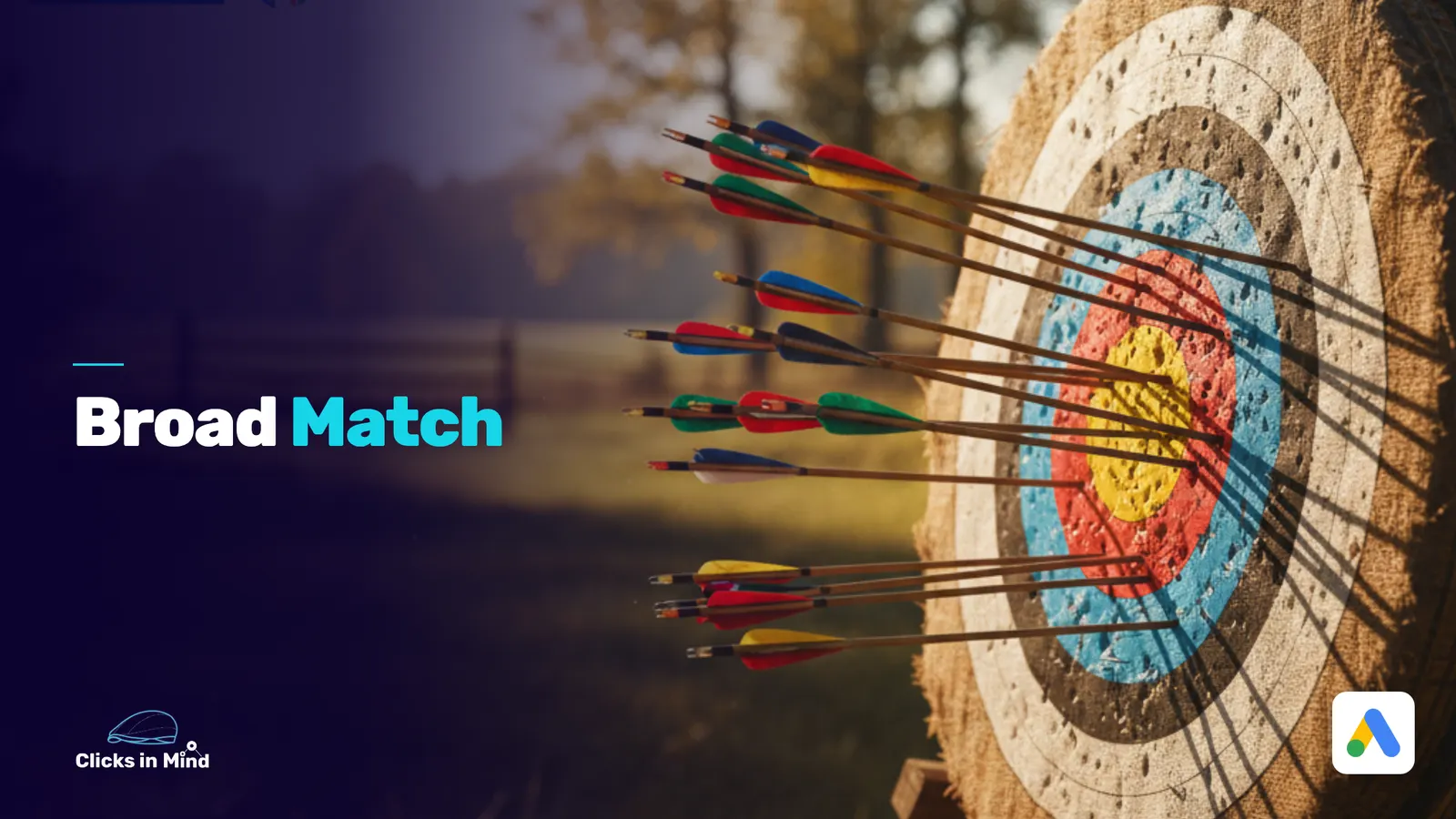
For an ad to be triggered, broad match only requires that a search query has a meaning related to the meaning of the keyword. Spelling and exact words don’t matter as long as there’s a thematic match.
Example: When does Broad Match trigger an ad?
You sell high-quality leather suit shoes. You enter the keyword suit shoes leather. In this case, all search queries that simply contain the word “shoes” can be thematically relevant enough to trigger ads.
| Search query | Could broad match trigger? |
|---|---|
| Leather suit shoes | ✅ |
| Suit shoes | ✅ |
| Leather shoes ladies | ✅ |
| How do I clean shoes? | ✅ |
| Which leather goes with my suit? | ✅ |
| Suit pants | ❌ |
You can see that broad match gives you relatively little control. Without negative keywords, you can quickly burn budget on irrelevant queries.
Broad Match as a bridge to AI Max
Since 2025, Google has positioned Broad Match as the central lever for AI-driven campaign management. From September 2026 onwards, campaigns with the campaign-level Broad Match setting will be automatically upgraded to AI Max.
AI Max uses Broad Match + Keywordless Technology to find relevant search queries based on landing page content, account keywords, assets, and URLs rather than just your entered keywords.
What that means: Broad Match is no longer “the aggressive match type you use carefully”, it has become the default tool for modern search campaigns.
Broad Match + Smart Bidding as Default Combo
Broad match alone isn’t the goal. The strong combination is Broad Match + Smart Bidding (Maximize Conversions, Maximize Conversion Value, Target CPA, Target ROAS). Statistically, 62 percent of advertisers using Smart Bidding use Broad Match as their primary match type.
Reason: Smart Bidding has an auction-time bidding mechanism. In every single auction, the AI decides based on all available signals whether a click is likely to convert. The breadth of broad match is compensated by selection precision per auction.
Without Smart Bidding, Broad Match remains risky.
If you don’t track conversions, switch to phrase or exact match for now.
You want more results with Google Ads?
Get a free Google Ads Reality Check: a compact video (about 10 minutes) showing where budget is slipping away in your account and what to change.
Get your Google Ads Reality Check →
When does Broad Match make sense?
Broad Match works particularly well in these situations:
- You use Smart Bidding (Maximize Conversions, Target CPA, Target ROAS, Maximize Conv Value).
- Your conversion tracking is solid. Without clean data, Smart Bidding can’t optimize.
- Your budget is sufficient to give Google’s algorithm room to learn (rule of thumb: daily budget ≥ desired CPA).
- You want to discover new converting search queries beyond your existing keyword list.
When should you avoid Broad Match?
- No conversion tracking. Without data, Smart Bidding has nothing to optimize against. Stay with phrase or exact match.
- Very small budget. Broad match needs volume to find patterns. Below ~5x your CPA in daily budget, you waste learning time.
- Highly regulated industries where you can only bid on specific terms.
- Brand-protection campaigns. Use Exact Match there (see Exact Match Keywords).
What about negative keywords?
With Broad Match, negative keywords are not optional, they are essential. Especially in new campaigns:
- Check the search terms report weekly.
- Add irrelevant terms as negative keywords.
- Use shared negative-keyword lists across campaigns.
Be aware: Since January 2023, Google may flag combinations of broad-match and phrase-match keywords as redundant under the “Remove redundant keywords” recommendation. Phrase is usually consolidated into broad. Details in Remove redundant keywords.
Broad Match vs. Phrase Match vs. Exact Match
| Match Type | Reach | Control | Use case 2026 |
|---|---|---|---|
| Broad Match | High | Low | Default with Smart Bidding |
| Phrase Match | Medium | Medium | Transition layer, controlled scale-up |
| Exact Match | Low | High | Brand protection, top performers |
See Phrase Match Keywords and Exact Match Keywords for deeper dives, or the Match Types Hub.
Conclusion
Broad Match in 2026 isn’t the same Broad Match from 2020. It’s an AI-driven matching mechanism that uses landing pages, account context, and bid signals. Paired with Smart Bidding and clean tracking, it’s the strongest scaling lever in modern Google Ads. From September 2026, AI Max takes this one step further as the auto-upgrade for campaign-level broad match.
Work smart with Clicks in Mind
You might also like
 Search
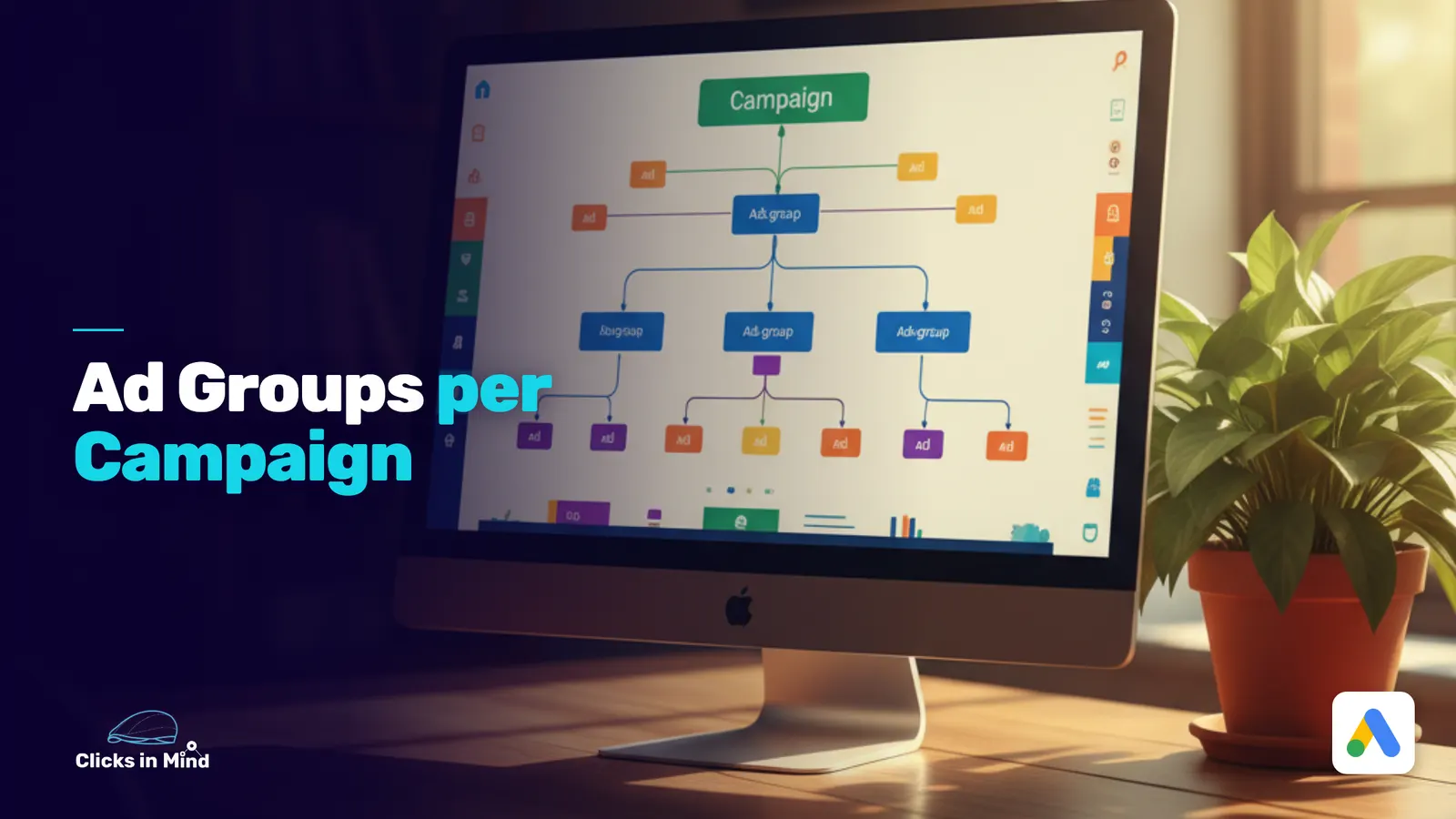
 How many Ad Groups per Google Ads Campaign in 2026?
Ideal ad-group count per Search campaign in 2026: 3-10 thematic clusters. AI Max context + structuring guide.
Read more → Search
 How many Google Ads per Ad Group in 2026?
How many RSAs per ad group in 2026? 1-2 are enough, large ad groups can use up to 3. AI Max context + A/B test setup step by step.
Read more →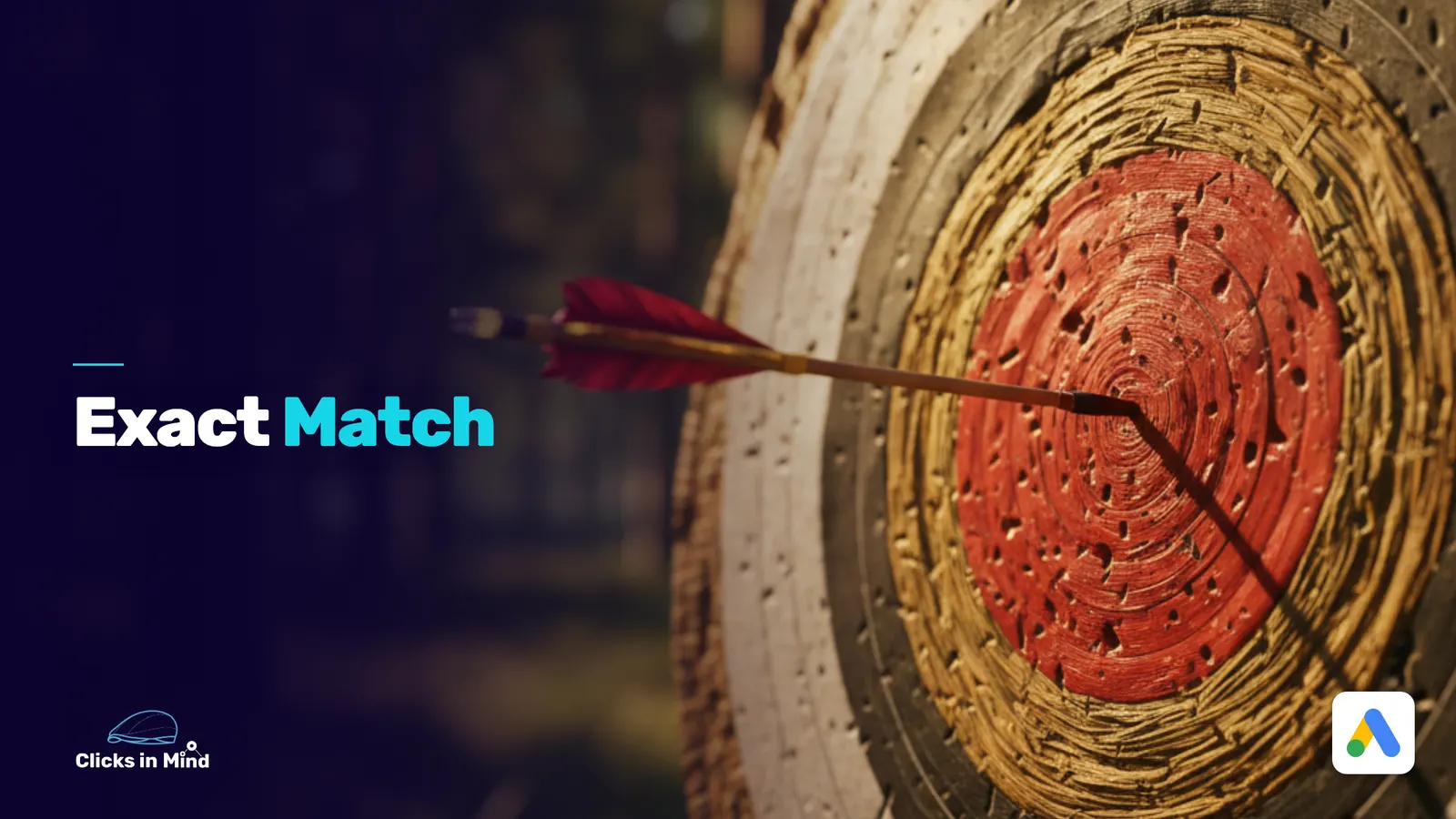 Search
 What are Exact Match Keywords in Google Ads? (2026 Guide)
Exact Match in 2026: no longer purely literal. Use it for brand protection, top performers, and PMax priority. Mechanics + use cases.
Read more →You want more results with Google Ads?
Get a free Google Ads Reality Check: a compact video (about 10 minutes) showing where budget is slipping away in your account and what to change.
Get your Google Ads Reality Check