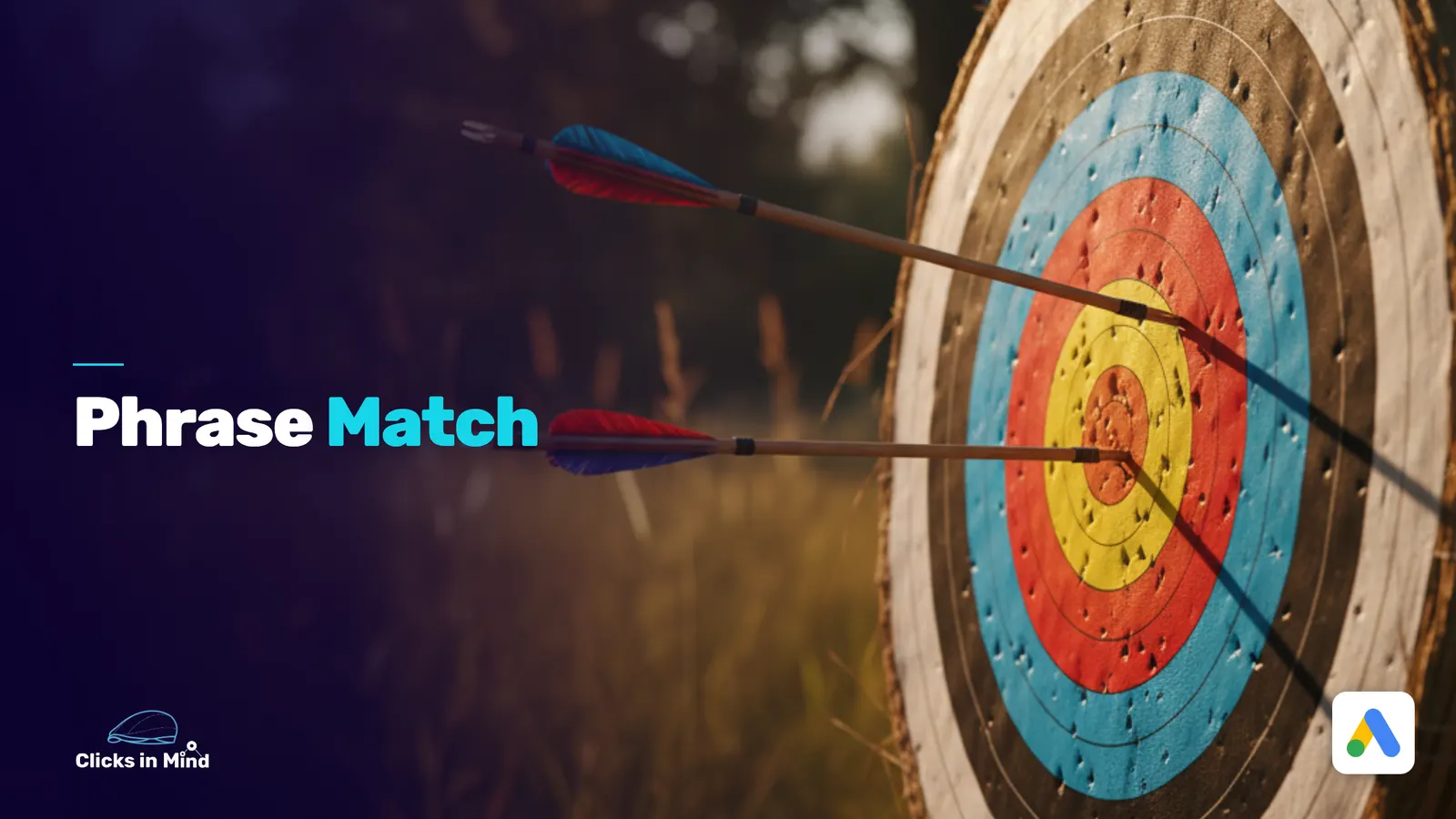
Contents How Phrase Match works in 2026
Phrase match used to be the middle ground between Exact and Broad. In 2026, that middle ground has shifted: phrase match has moved significantly closer to broad match. This post explains how phrase match really works today and when it still makes sense.
Quick answer: Phrase match in 2026 covers meaning variations as long as the core phrase is preserved. It’s still the controlled bridge between exact and broad, but Google increasingly consolidates phrase-match keywords into broad match under the “Remove redundant keywords” recommendation.
How Phrase Match works in 2026
Phrase match used to be the match type that locked in word order. Since the 2021/2022 updates, Google has extended the mechanics: phrase match today also covers meaning variations as long as the core phrase is preserved.
To use phrase match, put your keyword in quotation marks: "keyword".
Example
Keyword: "running shoes for women" matches today:
- “running shoes for ladies” (synonym)
- “best running shoes for women” (with modifier)
- “women’s running shoes” (compound form)
In practice, phrase match has moved significantly closer to broad match than it was in 2020.
Example with the suit shoes scenario
Keyword: "suit shoes leather"
| Search query | Could Phrase Match trigger? |
|---|---|
| Leather suit shoes | ✅ |
| Suit shoe | ✅ |
| Leather shoes chic ladies | ✅ |
| How to clean shoes? | ❌ |
| Which leather goes with my suit? | ❌ |
| Suit pants | ❌ |
You can see: phrase match is broad enough to capture meaning variations, but still draws a clear line at totally different intent.
The consolidation risk
What that means in practice: If you have both "running shoes" (phrase) and running shoes (broad), Google will likely flag phrase as redundant. Either accept the consolidation or use phrase for a different theme.
You want more results with Google Ads?
Get a free Google Ads Reality Check: a compact video (about 10 minutes) showing where budget is slipping away in your account and what to change.
Get your Google Ads Reality Check →
When Phrase Match still makes sense in 2026
Phrase match remains useful when:
- You want to enforce word order (e.g. “running shoes for women” but not “women run for shoes”).
- You use phrase as a controlled scaling step between exact and broad.
- Your Smart Bidding setup is not yet stable enough to go directly to broad.
For most modern search campaigns, however, Broad Match + Smart Bidding is the stronger lever (see Broad Match Keywords).
Phrase Match vs. Exact and Broad
| Match Type | Reach | Control | 2026 Use Case |
|---|---|---|---|
| Broad Match | High | Low | Default with Smart Bidding |
| Phrase Match | Medium | Medium | Controlled scaling, word-order lock |
| Exact Match | Low | High | Brand protection, top performers |
For deeper dives, see Match Types Hub, Exact Match Keywords, and Broad Match Keywords.
Conclusion
Phrase match in 2026 is no longer the strict word-order match type, it’s a softer middle ground between exact and broad. It still has its place as a controlled scaling layer, but most accounts are better served by going directly to Broad Match + Smart Bidding.
Work smart with Clicks in Mind
You might also like
 Search
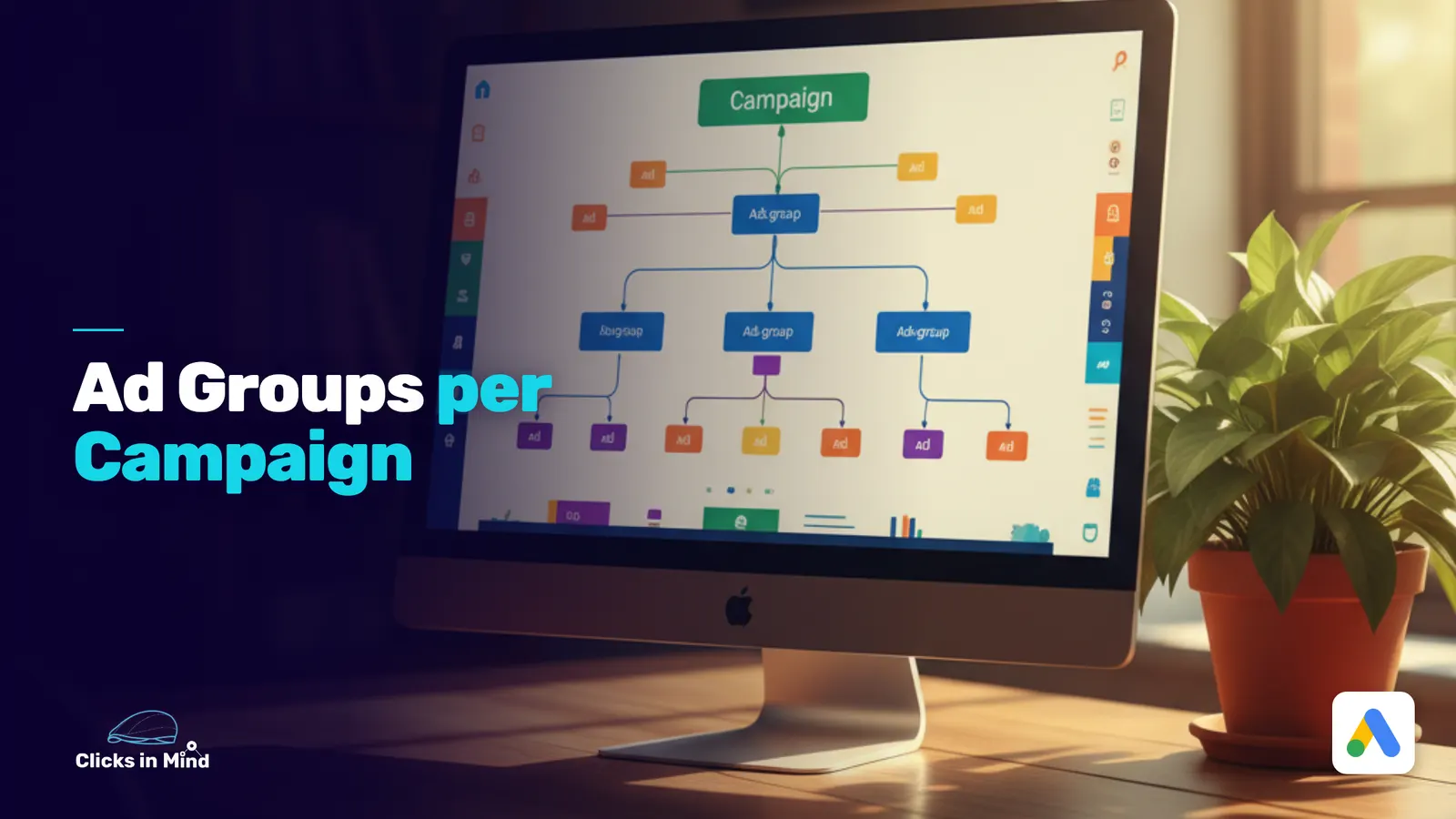
 How many Ad Groups per Google Ads Campaign in 2026?
Ideal ad-group count per Search campaign in 2026: 3-10 thematic clusters. AI Max context + structuring guide.
Read more → Search
 How many Google Ads per Ad Group in 2026?
How many RSAs per ad group in 2026? 1-2 are enough, large ad groups can use up to 3. AI Max context + A/B test setup step by step.
Read more → Search
 What are Broad Match Keywords in Google Ads? (2026 Guide)
Broad Match in 2026: bridge to AI Max from September 2026 + default combo with Smart Bidding. Mechanics, use cases, and risks explained.
Read more →You want more results with Google Ads?
Get a free Google Ads Reality Check: a compact video (about 10 minutes) showing where budget is slipping away in your account and what to change.
Get your Google Ads Reality Check